Musei, Cixerri valley
Cixiri de Musei
The seed a man hid inside raw earth walls, and that his grandson found again fifty years later. It has been returning to the soil of the valley ever since.
Three seeds of the valley
The products
250 gram packs. There is one harvest a year, in June, and what there is lasts as long as it lasts: availability changes with the season. The two Musei chickpeas and the black lentil of Cadesedda are the three varieties the committee keeps and grows in the Cixerri valley.
Traditional Agri-food Products of Sardinia — MIPAAF decree no. 72505 of 15 February 2021. Agrobiodiversity recognised under Regional Law 16/2014 and listed in the Regional Register of Sardinia. Protection committee founded in 2020.
Early twentieth century
The valley
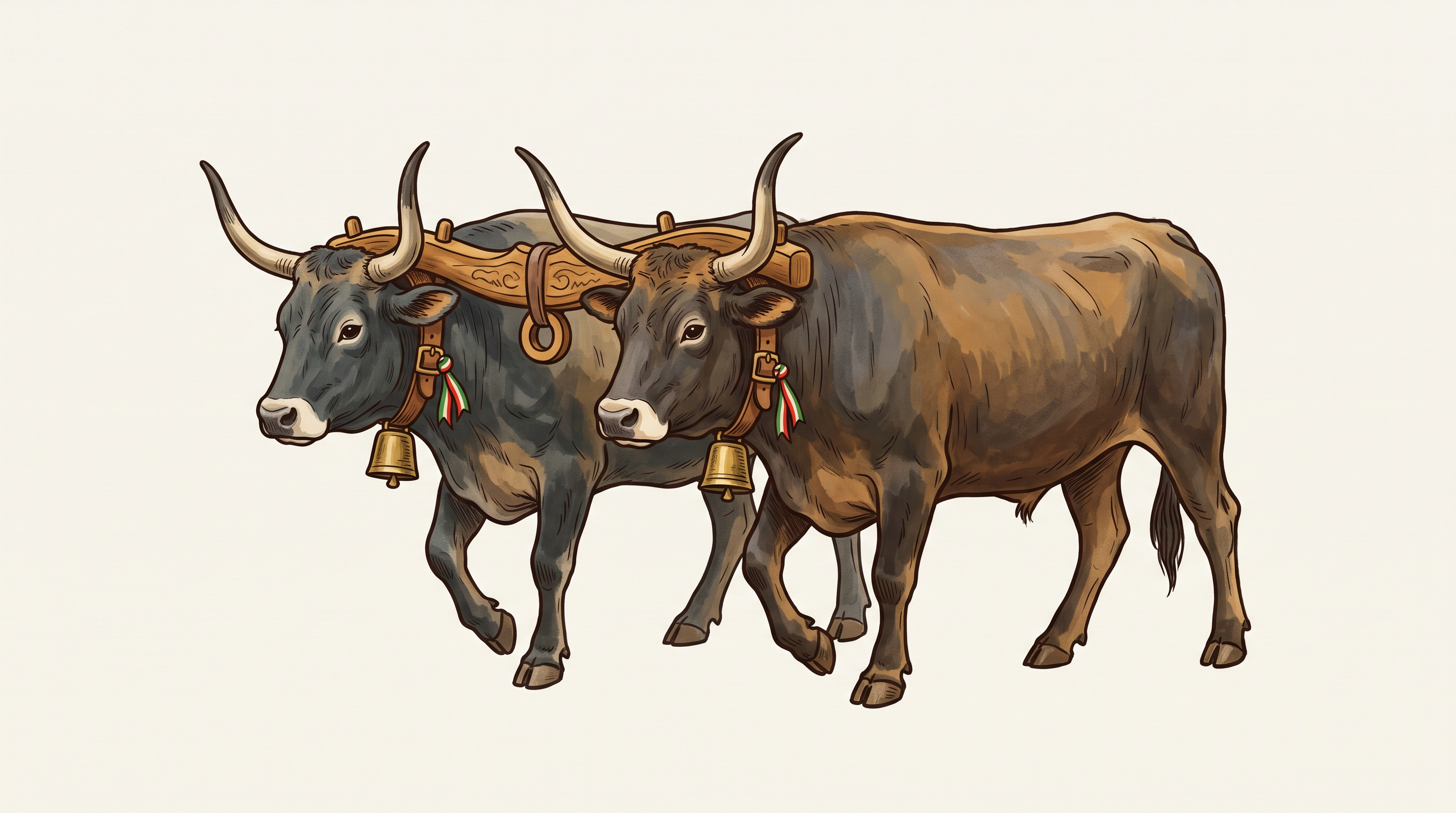
The Cixerri valley, with Musei at its centre, was long a land of grain and fine pulses: broad beans, peas, chickpeas. Dozens of farmers worked here, year after year selecting the best varieties and setting aside the finest seed of the harvest for the next sowing.
It was not a romantic choice but a necessity: next year's bread depended on the seed you kept. Every family had its own line, recognisable, kept at home and exchanged only with neighbours they trusted.
Around 1930
The gesture
Giovanni Caboni did not trust the future. He filled several small sacks with chickpeas and hid them in secret places, inside the raw earth walls of his fields, in spots only he knew.
He feared what a farmer really fears: a bad year, drought, a harvest too poor to hold seed back from, fire, animals left to graze where they should not. Any one of these was enough to end a variety grown for generations.
1980
The finding
Hover over the stones
Fifty years later, a wall of ladiri was due to come down. Inside, among the raw earth bricks, one of Giovanni Caboni's sacks was still there.
The comparison was immediate: those seeds were identical to the ones grown at home since the Sixties. The line had never been broken, and now there was proof. From that day the crop returned to larger fields.
My maternal grandfather Giovanni Caboni, around 1930, hid several small sacks of chickpeas in secret places, fearing these varieties would be lost in the years to come through bad seasons, drought, poor harvests, destruction by fire or by grazing animals. I found one of those sacks in 1980, hidden inside a wall that was due to be pulled down. I compared them with the ones we had been growing at home since the Sixties: they were the same. From that moment I began growing them in greater quantity.
Cicer arietinum L.
The plant
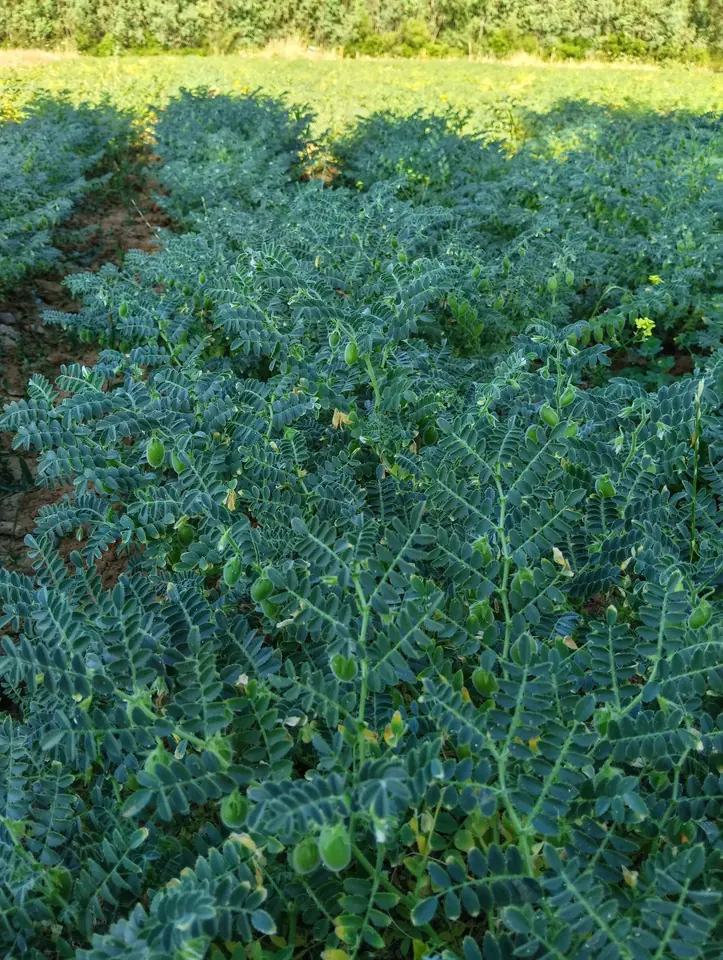
A low plant of medium size, semi-erect in habit and heavily branched. Small dark green leaves, a stem without pigmentation. Both flowering and ripening come early.
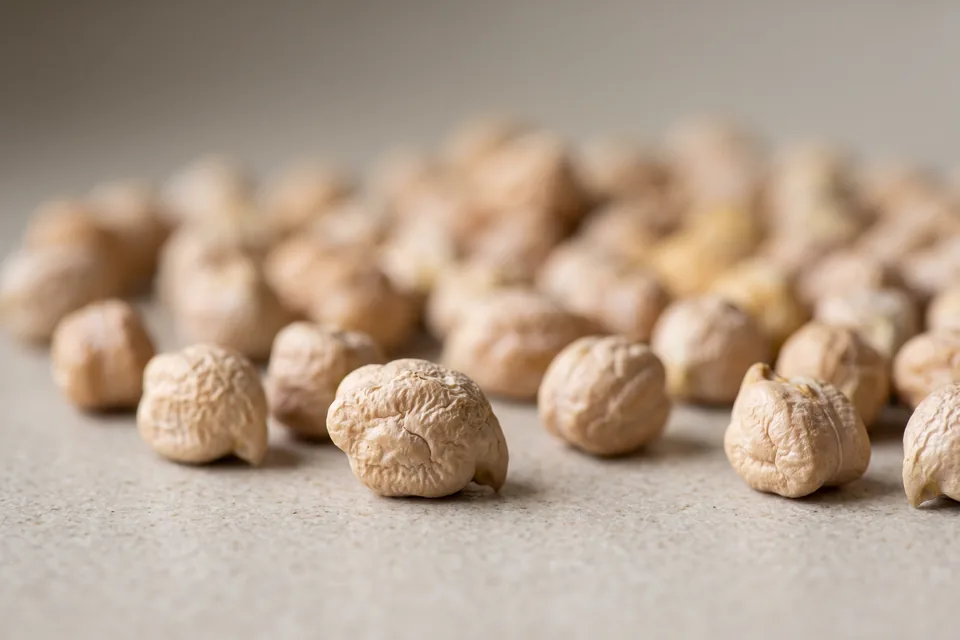
The pod is small and holds one or two seeds. The seed is beige, slightly wrinkled, ranging in shape from rounded to angular, no more than eight millimetres across. There are two types, told apart by flower colour: white and purple. They are the same kind, kept in two lines.
February to June
How it is grown
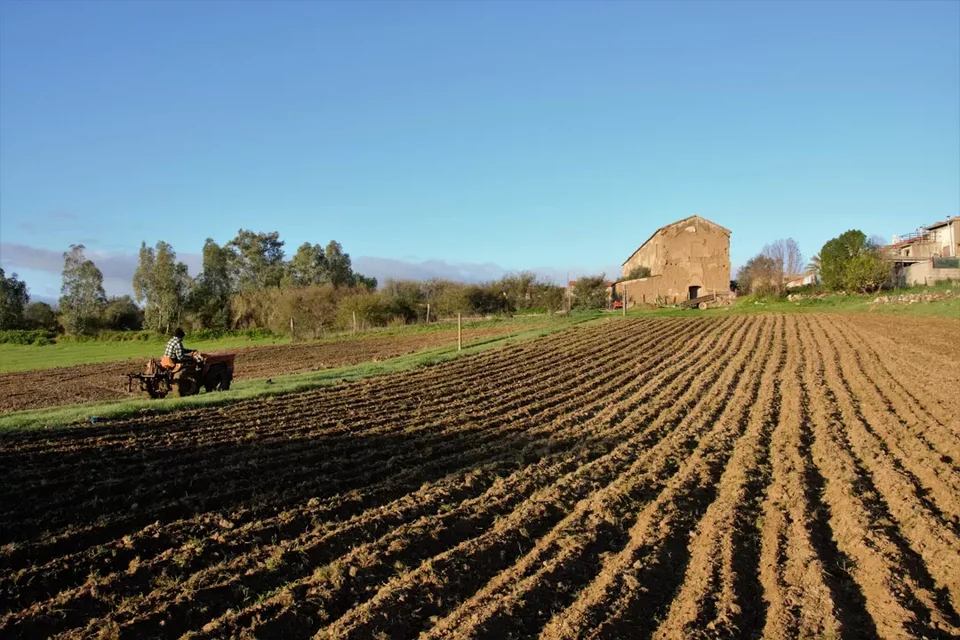
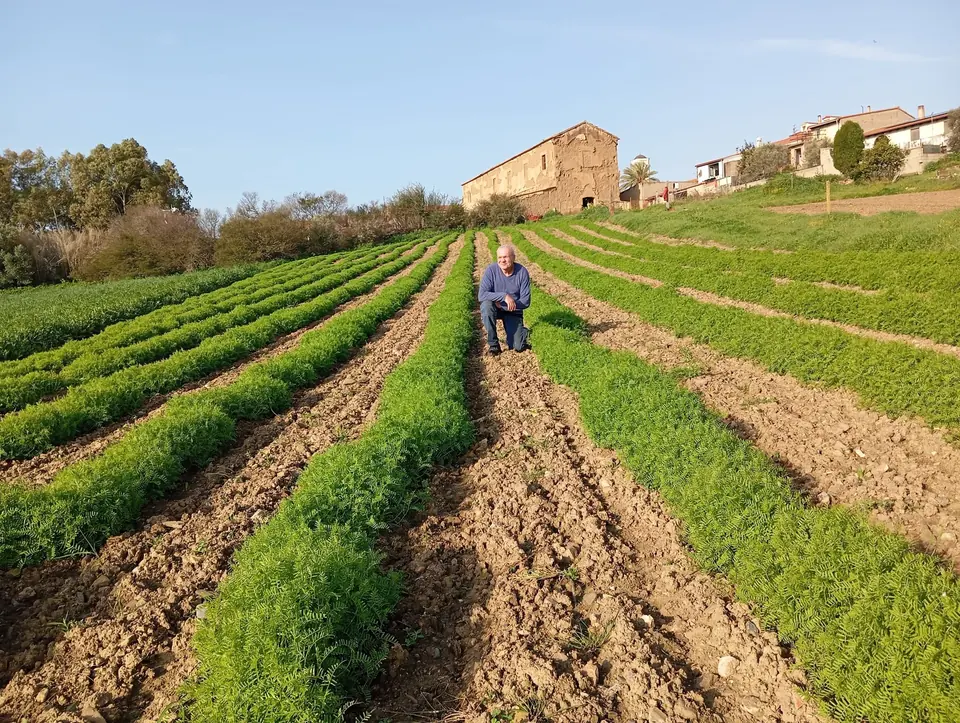
Sowing is in February, into very dry ground, with the seed laid in rows along the furrow opened by the plough. It is never broadcast by hand: each seed goes where it should, and the row stays straight the whole length of the field.
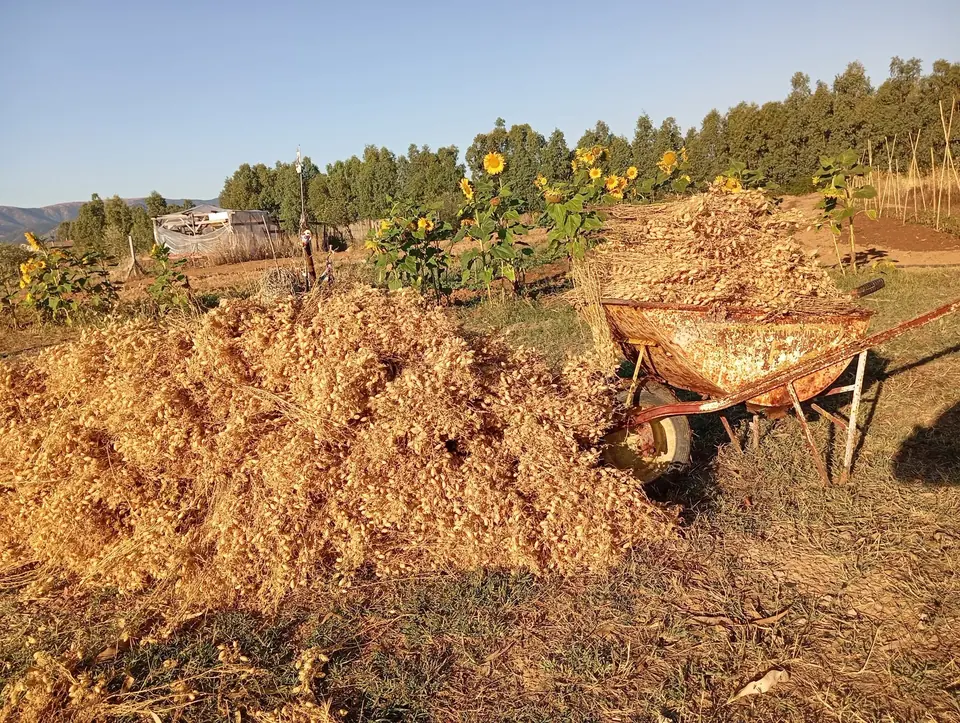
The cycle lasts about four months. Harvest and threshing are still often done by hand, as they have always been done here. That is why the yield stays small and changes with the season.
2020, 2021, 2023
The custodians
In 2020 the Committee for the Protection of Identity Biodiversity was founded in Musei, devoted to the Cixiri de Musei. It is not a commercial brand: it is a group of farmers taking on the task of keeping two varieties alive, along with the ways they are grown.
In 2021 the Musei chickpea entered the list of Traditional Agri-food Products of Sardinia by decree of the Ministry of Agriculture. It is recognised as agrobiodiversity under Regional Law 16 of 2014 and listed in the Regional Register. Since 18 October 2023 Giovanni Portas has been Custodian Farmer for both varieties, white-flowered and purple-flowered.
To buy them
Where to find them
The chickpeas are bought directly from the people who grow them. The harvest is limited and changes with each season.
Custodian Farmer
Giovanni Portas
Musei, Sud Sardegna
Listed in the Regional Register since 18 October 2023 for the white-flowered and purple-flowered Musei chickpea.
Sales and distribution
Simone Franzina
Musei, Sud Sardegna
Address
Via Umberto I, 209010 Musei (SU)
Loading the map lets Google receive your IP address and may set cookies.
Today
The seed goes on
Local varieties are not a memory to keep under glass. They are genetic material selected over centuries for this climate and this soil, which is exactly why they matter to anyone studying how farming will cope in the decades ahead.
Part of this heritage is held in Sardinia's germplasm bank. The other part, the one that counts, is in the fields: a seed stays alive only if someone keeps sowing it. What was hidden inside a wall returns every year to the soil of the valley.
Cixiri de Musei
Comitato di Tutela della Biodiversità Identitaria